What are the conditions under which artists formulate specific responses? I think of George Kubler and his analysis of the shape of time: “Every thing is a change of something prior, and a model for something that follows.” What separates a craftsman from La Pila, Manabí from one of his pre-Columbian ancestors more than two thousand years ago? And what relevance does a contemporary artist assume in returning to these forms?
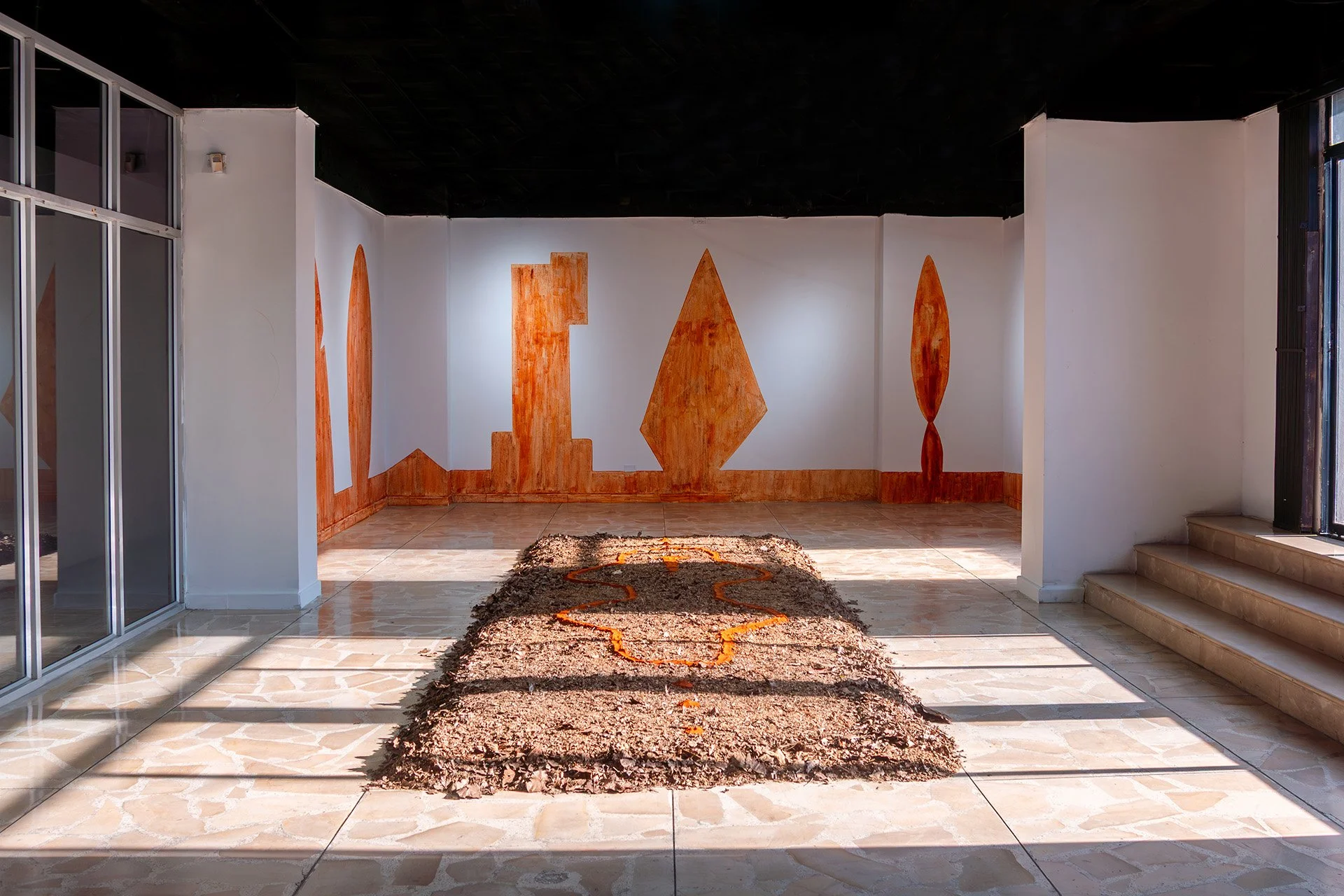
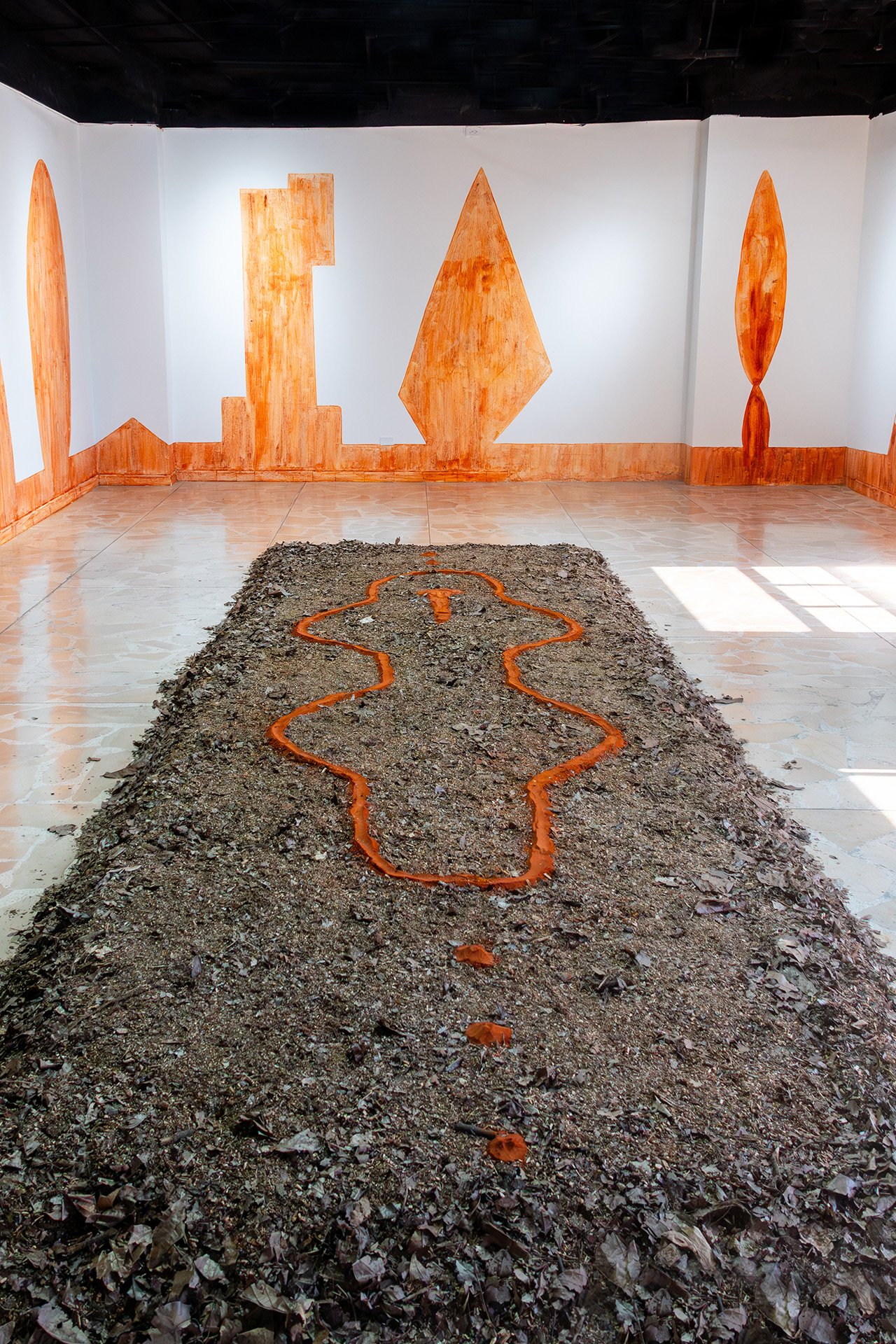
Every thing is a change of something prior, and thus we continue to formulate responses. Perhaps what emerges here is precisely that: a field of vestiges. In Entre lo humano y lo animal (2026) by Koyoltzintli, it is not exactly the drawing that calls our attention, but rather a certain relation to the earth, as if it were presented as a kind of sanctuary of the human condition.
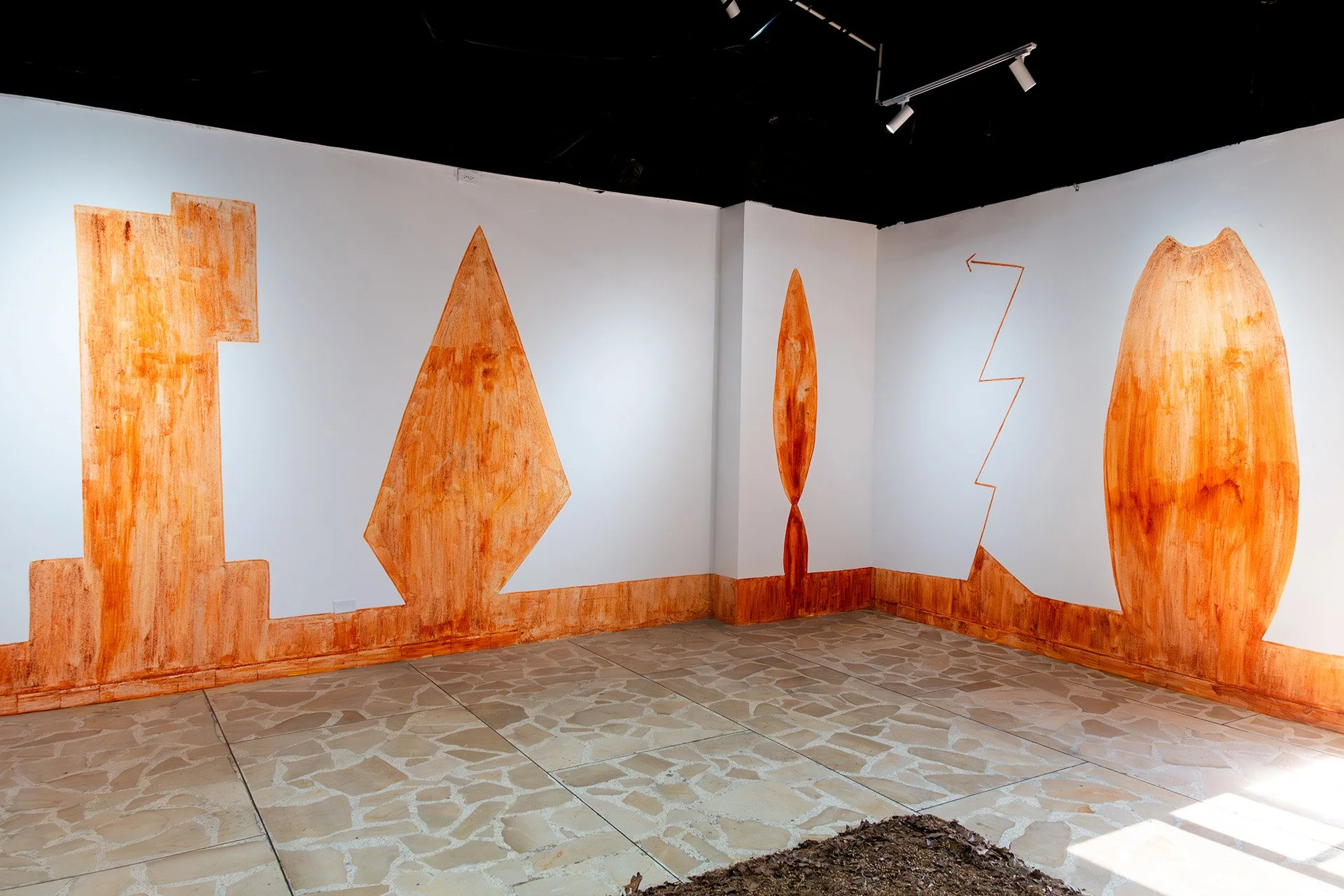
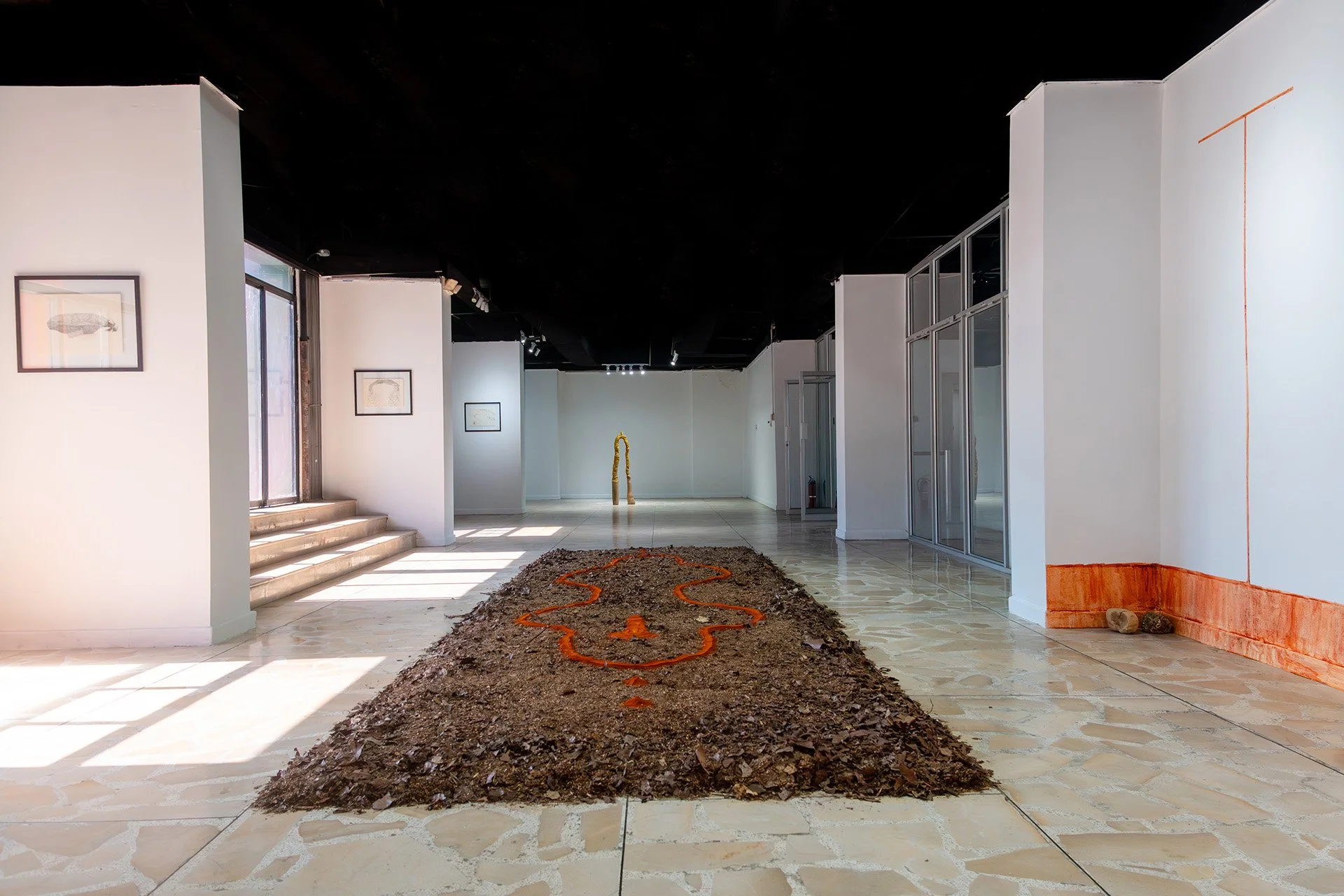
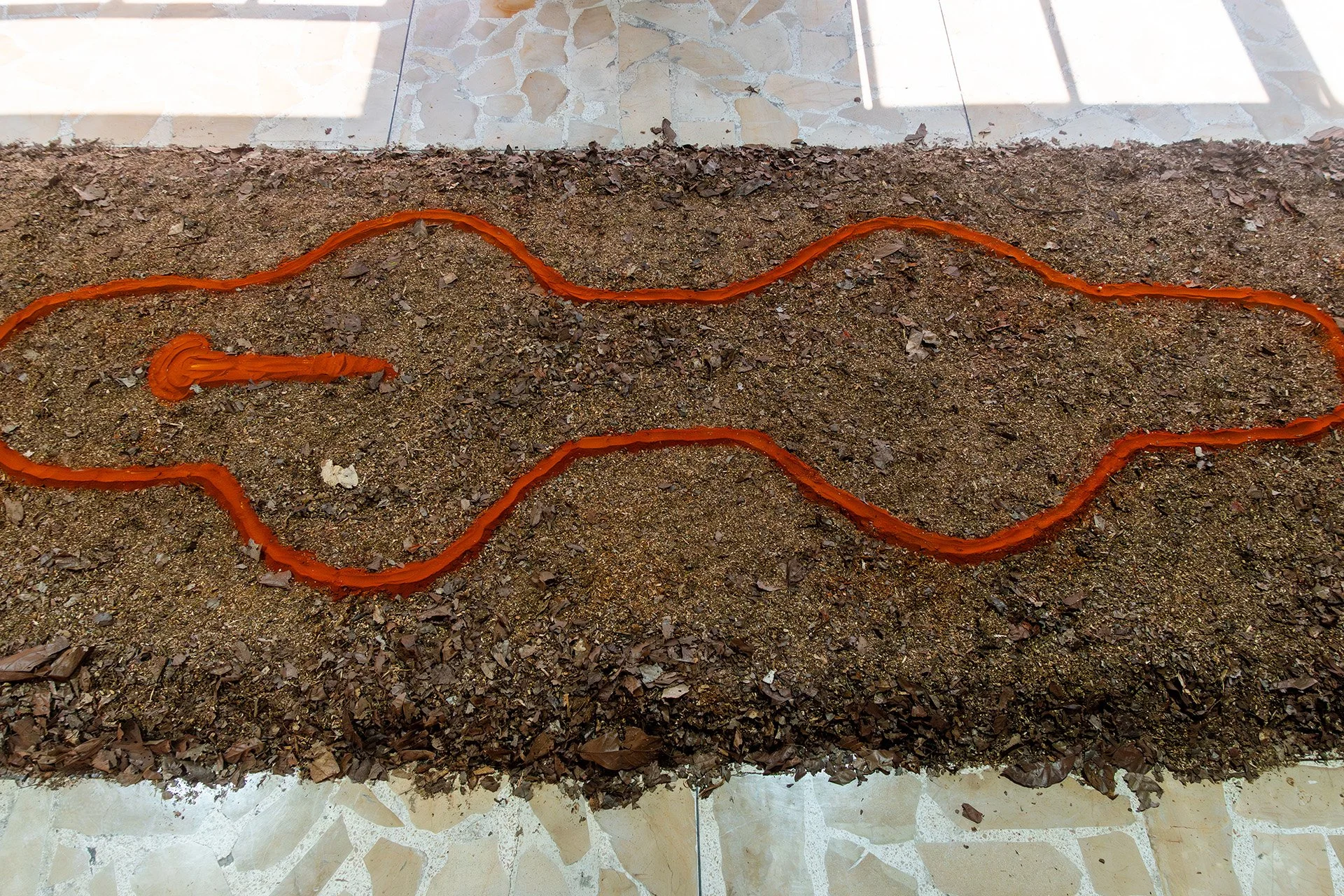
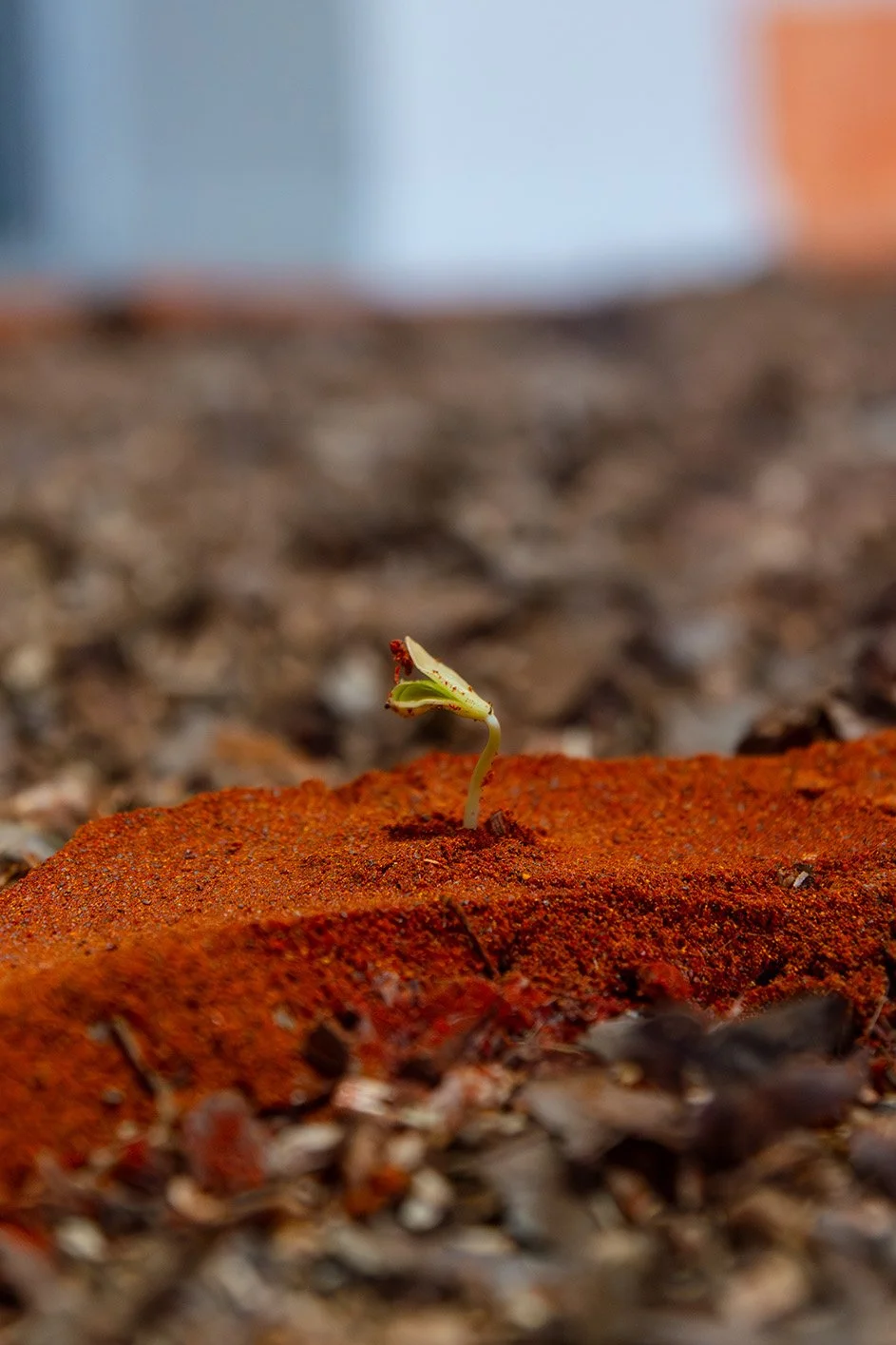
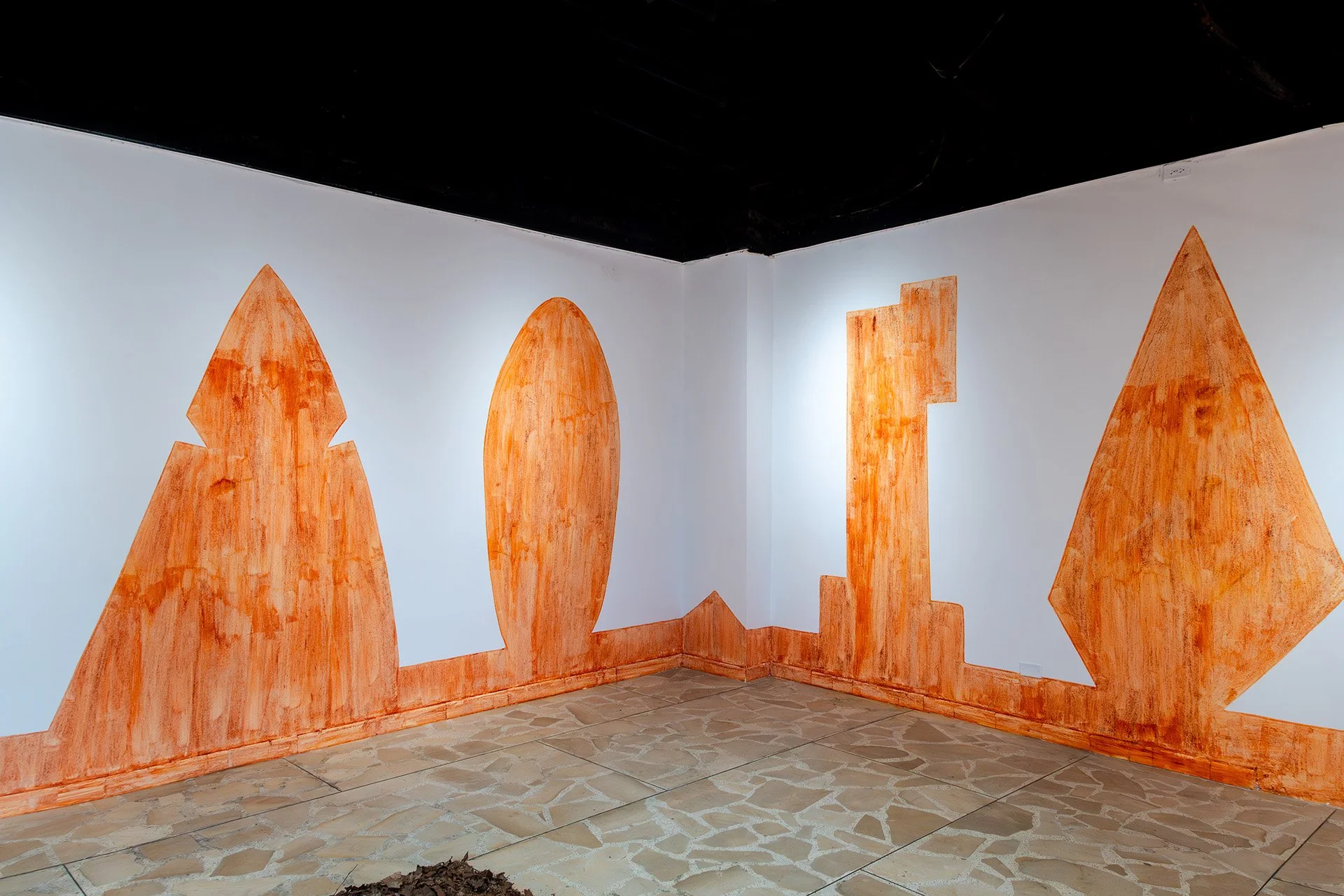
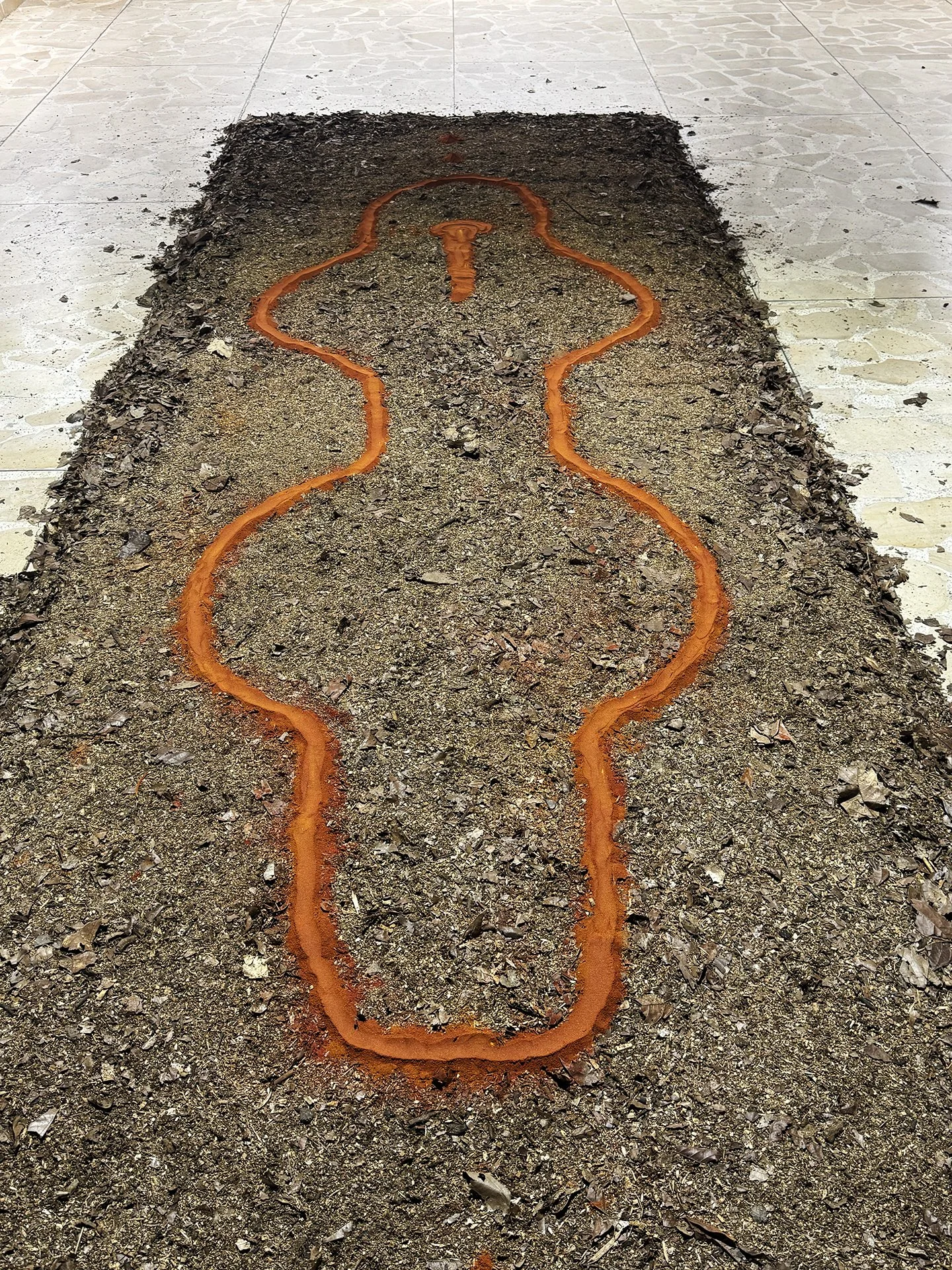
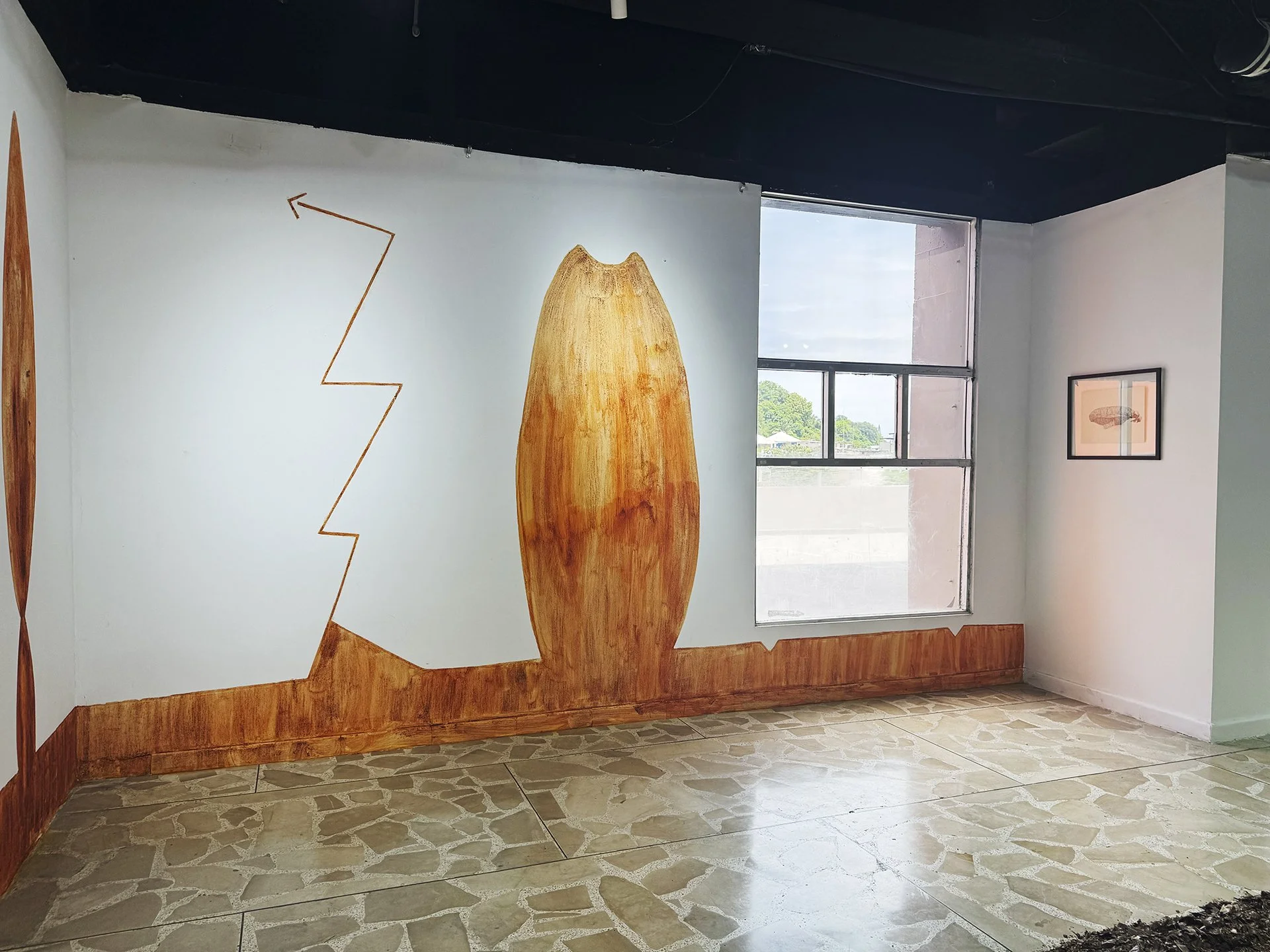
The installation evokes a vault of affects directed toward its native territory. The central volume—composed of earth and a chimeric silhouette in achiote—proposes a double reading between life and death. On the wall, quasi-geometric forms, also traced in achiote, contain embryonic shards: pieces that will be remembered, or that were once forgotten. It is difficult not to think that the Museo de Bahía is itself undergoing a moment of renewal.
If in Koyoltzintli the earth appears as origin, in Paulina Romero memory takes the form of the fragment. Vestigios en 2800 gestures toward entropic essays of the imaginary, where Romero unfolds a series of bowls and vessels atop acrylic columns, in contrast to the octagonal forms produced by G1 commands in the printing process.
Her relationship with toquilla—the plant fiber used in weaving the traditional Panama hat—and with the community of Pile, Manabí, one of the historical centers of this practice, is tied and untied within the installation. Romero is delicate in her execution yet critical in her intervention, guiding the pieces toward a state of fragmentation that is not physical but identitarian.
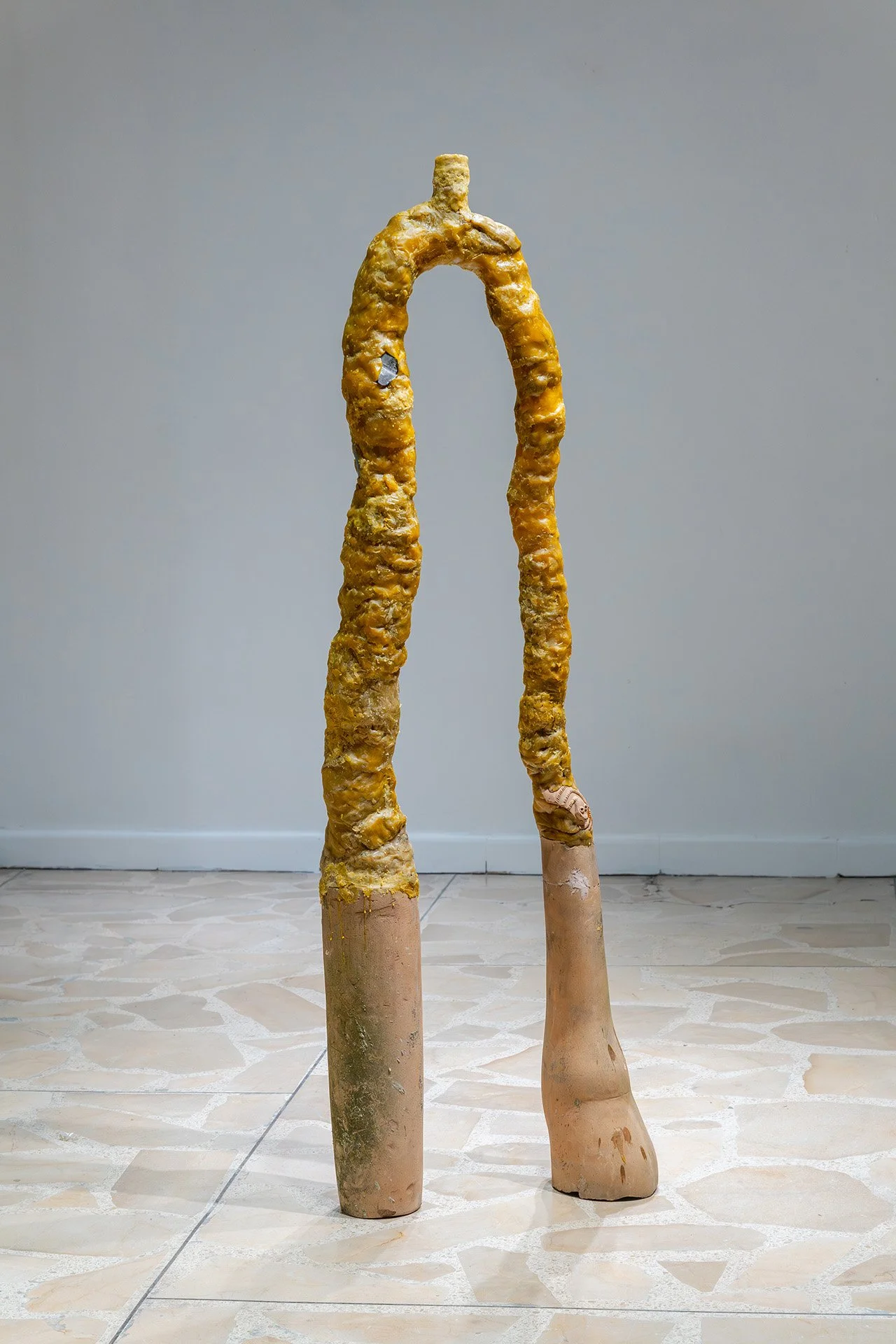
And we return to the specific: a topology of objects unfolded in space, interventions that resemble characters from stories and legends yet to be told. Pedro Riofrío reimagines history on the sculptural plane. It is difficult to move through the exhibition without encountering his works and, at the same time, assigning them a meaning of their own, separate from the artist’s actions.
His forms seem to suggest an alveolar structure that sustains the exhibition through their dispersion. Each piece functions as a point of support within a silent architecture: barely perceptible networks where matter organizes space. It is perhaps in this disposition of materiality that everything becomes most evident: blocks that, even in their apparent inertia, operate as traces of memory within the territory of the exhibition.
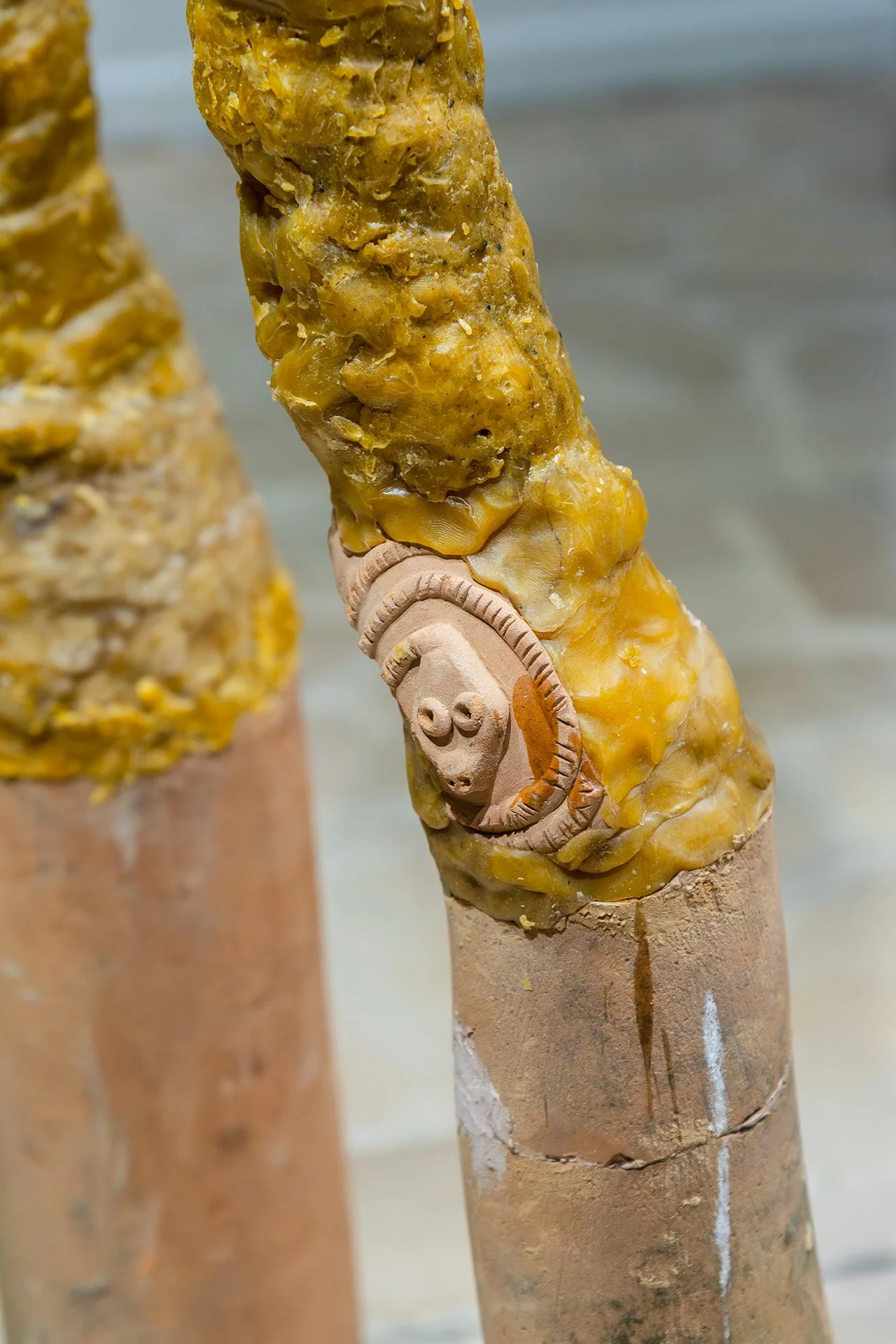
For decades, these pre-Columbian forms inhabited vitrines. In Murmullos de Arcilla, matter seems to return to the conditions that made it possible: humidity, temperature, and time. Not as artifices separated from our cosmogonies, but as interventions that still unfold within the time we inhabit.
-Text by Andy Hess
¿Cuáles son las condiciones bajo las cuales los artistas formulan respuestas específicas? Pienso en George Kubler y en su análisis sobre la historia del tiempo: “Toda cosa es un cambio de algo anterior, y un modelo de algo que le sigue.” ¿Qué separa a un artesano de La Pila, Manabí, de uno de sus ancestros precolombinos de hace más de dos mil años? ¿Y qué relevancia adquiere un artista contemporáneo al retomar estas formas?
Toda cosa es un cambio de algo anterior, y así continuamos formulando respuestas. Tal vez lo que aparece aquí es precisamente eso: un campo de vestigios. En la obra Entre lo humano y lo animal (2026) de Koyoltzintli, no es exactamente el dibujo lo que convoca nuestra atención, sino una cierta relación con la tierra, como si esta se presentara como un sagrario de la condición humana.
La instalación remite a una bóveda de afectos dirigida hacia su territorio natal. El volumen central —compuesto por tierra y una silueta quimérica en achiote— propone una doble lectura entre vida y muerte. En la pared, formas cuasi geométricas trazadas también en achiote contienen embriones de tiestos: piezas que serán recordadas, o que alguna vez fueron olvidadas. Resulta inevitable pensar que el Museo de Bahía también atraviesa un momento de renovación.
Si en Koyoltzintli la tierra aparece como origen, en Paulina Romero la memoria adopta la forma del fragmento. Vestigios en 2800 remite a ensayos entrópicos del imaginario donde Romero despliega una serie de cuencos y vasijas sobre columnas acrílicas, en contraste con las formas octogonales producidas por los comandos G1 en la impresión.
Su relación con la toquilla —fibra vegetal utilizada en el tejido del tradicional sombrero de paja toquilla— y con la comunidad de Pile, uno de los centros históricos de este oficio en Manabí, se ata y se desata dentro de la instalación. Romero es delicada en su ejecución, pero crítica en su intervención, guiando las piezas hacia un estado de fragmentación que no es físico sino identitario.
Y volvemos a lo específico: una topología de objetos desplegados en el espacio, intervenciones que parecen personajes de cuentos y leyendas aún por contar.
Pedro Riofrío reimagina la historia desde el plano escultórico. Es difícil atravesar la exhibición sin encontrarse con sus piezas y, al mismo tiempo, otorgarles un significado propio, separado de las acciones del artista.
Sus formas parecen insinuar una estructura alveolar que sostiene la exhibición através de su dispersión. Cada pieza funciona como punto de apoyo dentro de una arquitectura silenciosa: redes apenas perceptibles donde la materia organiza el espacio. Es quizás en esta disposición de su materialidad donde todo se vuelve más evidente: bloques que, aun en su aparente inercia, operan como huellas de memoria en el territorio de la exhibición.
Durante décadas estas formas precolombinas habitaron vitrinas. En Murmullos De Arcilla, la materia parece volver a las condiciones que la hicieron posible: humedad, temperatura y tiempo. No como artificios separados de nuestras cosmogonías, sino como intervenciones que aún ocurren dentro del tiempo que habitamos.
-Texto por Andy Hess